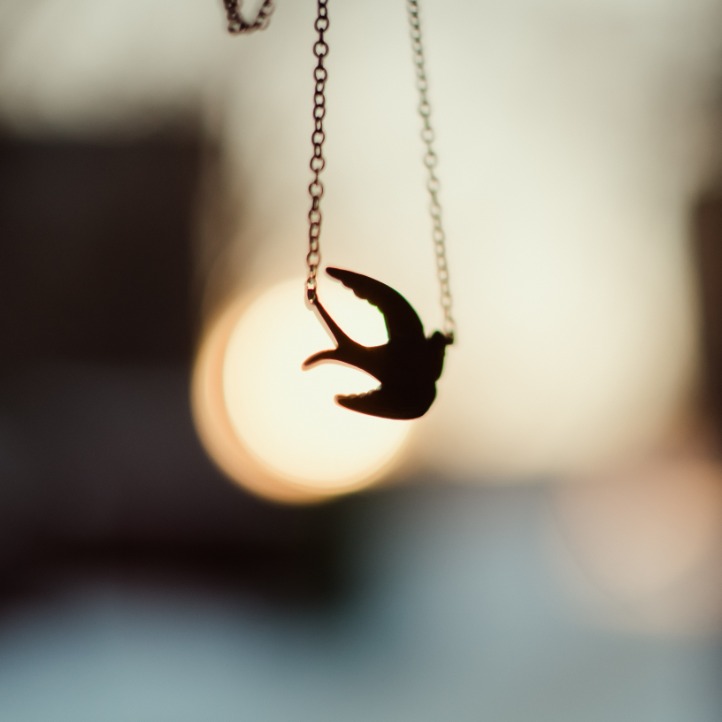
Love birds? Maybe you have a pet parrot perched on your shoulder, a bird feeder in the backyard, or just a deep appreciation for anything with wings. Either way, these creatures have fascinated people for centuries. Why not wear bird-inspired jewelry for a piece of that history? Let’s explore some common types of bird jewelry and the symbolism behind them.
Owl Jewelry
Ancient Greeks associated the owl with Athena, goddess of wisdom and strategy, which is where the bird’s reputation for intelligence originates. The owl was also Athena’s sacred animal and appeared on Athenian coins as a marker of that connection.
In many Indigenous traditions, the owl is tied to the spiritual world and is sometimes seen as a messenger between the living and the dead. Celtic traditions held a similar view, treating the owl as a guide through darkness and the unknown.
Owl jewelry tends to feature wide-set eyes and detailed feather work, reflecting that sense of watchfulness the bird is known for.
Peacock Jewelry
In Hinduism, the peacock is the sacred vehicle of Kartikeya, the god of war, and is associated with Lakshmi, the goddess of prosperity and beauty. The bird’s tail, with its distinctive eye-like patterns, became a symbol of the all-seeing divine in several traditions.
In Greek mythology, those same eye markings on the peacock’s feathers were said to be the eyes of Argus, a hundred-eyed giant placed there by Hera.
Peacock jewelry leans heavily into color, often using enamel or gemstones to replicate the iridescent blue-green of the tail feathers. It’s one of the more ornate categories in bird jewelry for that reason.
Hummingbird Jewelry
The Aztecs associated the hummingbird with Huitzilopochtli, their god of sun and war. Warriors who died in battle were believed to be reincarnated as hummingbirds, which connected the bird directly to courage and the afterlife.
In many Latin American and Caribbean traditions, the hummingbird is a symbol of love and is believed to bring good luck to those who spot one. In some Native American traditions, the hummingbird is a healer, sent to restore balance when things go wrong.
Hummingbird jewelry almost always depicts the bird in flight, wings extended, which reflects that association with constant energy and motion.
Crane Jewelry
In Japan, the crane is one of the most symbolically loaded birds in the culture. It represents longevity and good fortune, and the tradition of folding a thousand origami cranes, called senbazuru, is rooted in the belief that doing so grants a wish.
In China, the crane symbolizes immortality and is often depicted alongside pine trees and clouds in art, both of which share the same association with long life. The bird was also used in imperial iconography to represent high-ranking officials.
Crane jewelry tends toward clean, elongated lines that reflect the bird’s posture, tall and still with a long neck and precise proportions.
Eagle Jewelry
The eagle is a prominent symbol in Native American jewelry. In many Native traditions, the eagle represents spiritual power, courage, and a direct connection to the Creator. The eagle’s ability to soar at extreme heights placed it closest to the heavens, which is why it became a messenger between the human world and the divine.
Eagle jewelry is typically substantial, rendered in sterling silver with detailed feather work rather than delicate or minimalist styling.
Raven Jewelry
In Norse mythology, Odin kept two ravens named Huginn and Muninn, meaning thought and memory. He sent them out each day to fly across the world and return with knowledge, which positioned the raven as a symbol of intelligence and omniscience.
In Pacific Northwest Indigenous traditions, the raven is a trickster and a creator figure. One of the most widespread stories credits the raven with stealing the sun and releasing it into the sky, bringing light to the world. The bird holds both chaos and creation in the same mythology.
Raven jewelry tends to be darker in aesthetic, often featuring blackened silver or oxidized finishes that reflect the bird’s actual coloring.
Swallow Jewelry
Sailors historically tattooed swallows on their chests to track nautical miles traveled. One swallow represented 5,000 miles, two swallows represented 10,000. The bird’s reputation for always finding its way home made it a symbol of safe return, which is why sailors adopted it as a protective image.
In Victorian mourning jewelry, swallows appeared as symbols of the soul in flight after death. The bird also showed up in Christian iconography as a symbol of resurrection, tied to its migratory pattern of disappearing and returning each year.
Swallow jewelry typically shows the bird mid-flight, wings swept back, and often appears in pairs.
Phoenix Jewelry
The phoenix appears independently in ancient Egyptian, Greek, and Chinese mythology, each version built around the same idea. The bird lives for hundreds of years, builds a nest, ignites, and rises again from the ash. In Egyptian tradition, the bird was called the Bennu and was associated with the sun god Ra and the cycle of death and rebirth.
In Chinese mythology, the fenghuang is the feminine counterpart to the dragon and symbolizes virtue, grace, and the union of yin and yang. It’s not precisely the same as the Western phoenix but shares the same fire-and-renewal symbolism.
Phoenix jewelry is typically dramatic in scale, featuring spread wings and flame detailing rendered in gold or red and orange stones.
Robin Jewelry
In British and European folklore, the robin’s red breast is explained through a story in which the bird was scorched while fanning the flames of a dying man’s fire to keep him warm. That story embedded the robin as a symbol of selflessness and care.
The robin also appears in Christian tradition as a bird that tried to pull thorns from Christ’s crown, staining its breast red in the process. Because of that, robins became associated with divine protection and good fortune.
In contemporary spiritual traditions, a robin appearing after someone’s death is widely interpreted as a sign from that person. Robin jewelry is typically small and warm in tone, often featuring the bird’s red breast in coral, carnelian, or enamel.
Sparrow Jewelry
In ancient Egypt, sparrows were believed to catch the souls of the recently dead and carry them safely to the afterlife. Sailors also adopted the sparrow alongside the swallow, using it as a symbol of safe return home.
In Christian scripture, the sparrow appears in the Gospel of Matthew as proof of divine attention to even the smallest creatures. That passage made the sparrow a symbol of being seen and protected regardless of status.
In Greek mythology, the sparrow was sacred to Aphrodite and associated with love. Sparrow jewelry is typically modest in size, which fits the bird’s symbolism of finding meaning in something small.
What Bird Speaks to You?
Bird-inspired jewelry pulls from mythology, sailor tradition, imperial history, and spiritual belief depending on which bird you choose. An owl piece connects you to Greek and Indigenous symbolism around knowledge. A swallow piece ties you to maritime history. A phoenix piece references one of the oldest rebirth myths in the world.
The bird you choose isn’t just decorative. It comes with a story that stretches back further than most people realize.


