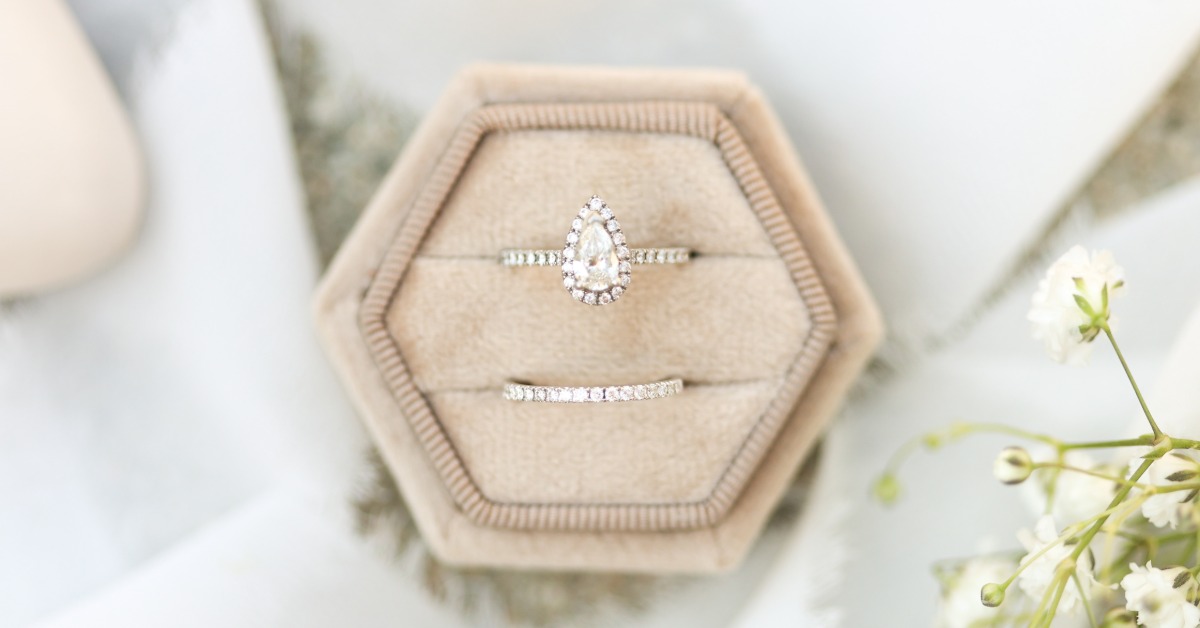
An engagement ring may take center stage, but the wedding band completes the story. Learning how to pick the best wedding band for your engagement ring requires attention to personal taste and physical compatibility. The right pairing should feel intentional without diminishing the engagement ring. Some couples prefer a seamless match, while others create contrast through shape or texture. By considering how both rings interact in life, you can choose a band that enhances the engagement ring and remains comfortable for years of wear.
Start With the Engagement Ring Setting
The engagement ring setting determines which bands can sit beside it comfortably. A high-set center stone often leaves enough clearance for a straight band to rest flush against the engagement ring. Low settings or wide prongs may create a gap between the rings. That space does not indicate a poor match if you enjoy the look, but it should represent a deliberate choice.
Examine the ring from the side as well as from above. The profile reveals where a wedding band might touch the basket or supporting metal. Repeated contact can cause wear over time, especially when diamonds or textured details rub against polished surfaces. A jeweler can identify contact points and recommend a band that protects both pieces.
Decide Between a Flush Fit and a Visible Gap
A flush fit creates a continuous appearance and keeps the rings closely aligned. Straight bands work well when the engagement ring has enough height beneath its center setting. This pairing often feels traditional and makes the two rings appear like a coordinated set. It also reduces shifting when both rings have compatible contours.
A visible gap can give each ring more visual definition. Some people appreciate the area of skin between the bands because it highlights the engagement ring silhouette. Others select an open band designed with a break in the center. There is no universal rule, so compare both arrangements before deciding which appearance feels natural.
Consider Contoured and Notched Bands
Contoured bands curve around the engagement ring rather than running in a straight line. A gentle curve can accommodate a round center setting, while a sharper contour may suit an elongated or angular stone. This style brings the rings closer together and can create a custom appearance without altering the original setting.
Notched bands include a recessed area that allows part of the engagement ring to nest inside. They can solve difficult clearance issues and produce a particularly close fit. However, some notched designs look incomplete when worn alone. Consider how often you plan to wear the wedding band without the engagement ring before committing to this structure.
Balance Width and Visual Weight
The wedding band should support the engagement ring without overwhelming it. Reviewing wedding band widths and proportions helps create balance between a delicate setting and a more substantial band. A slim engagement ring typically pairs naturally with a narrow band, while a broad setting can handle more visual weight. Matching widths creates continuity, but contrasting widths can add character.
Try several sizes rather than judging width from photographs. A small difference can change how the set covers the finger and how prominently each ring appears. Finger length also affects the overall impression. The most attractive proportion should leave the set comfortable while allowing the engagement ring to remain visually distinct.
Choose Metals With Intention
Matching metals creates a unified look and usually ensures that both rings age in a similar way. A platinum band beside a platinum engagement ring will develop a comparable patina. Gold rings with the same karat and color also tend to coordinate naturally. When possible, confirm the precise metal rather than relying only on its visible color.
Mixed metals offer a more distinctive result. Yellow gold can warm a white metal setting, while rose gold can introduce soft contrast. Consider metal hardness before pairing different materials because a harder ring may gradually wear against a softer one. Strategic spacing or soldering may help, although soldering limits the ability to wear each ring separately.
Coordinate Diamonds and Decorative Details
A diamond band can echo the sparkle of the engagement ring and make the complete set feel more luminous. Look closely at stone shape and setting style. A band with similar diamonds creates cohesion, while a different cut adds controlled contrast. Stones do not need to match perfectly, but their scale should feel related.
Pay attention to where the diamonds end along the band. Half-eternity styles keep stones mainly across the visible top and usually allow easier resizing. Full-eternity bands offer sparkle around the entire finger but can feel textured between adjacent fingers. Raised shared prongs may also rub against the engagement ring, so check the edges carefully.
Decorative metal bands provide interest without additional stones. Engraving and milgrain edges can complement vintage-inspired settings. If the engagement ring already includes detailed metalwork, choose a band that repeats one design cue instead of competing with every feature. Restraint often helps intricate engagement rings retain their impact.
Think About Everyday Comfort
A beautiful pairing still needs to work during ordinary activities. Wear sample bands long enough to notice pressure between the fingers and movement at the base of the finger. A wide combined set may fit more tightly than either ring alone. Comfort-fit interiors can soften the feel of substantial bands and make removal easier.
Lifestyle should guide the amount of texture and stone exposure you select. People who work frequently with their hands may prefer smooth edges or protected stones. An active routine does not eliminate decorative options, but it makes secure settings especially important. Consider how often gloves or fabrics might catch on raised details.
Try the Rings Together in Person
Shopping with the engagement ring provides the clearest view of scale and alignment. Place each candidate directly beside it under different lighting. Look at the set from several angles, then separate the rings to judge whether the wedding band also works independently. Future bands may also influence this choice.
Choose a Pairing That Feels Personal
The strongest ring combination reflects the wearer rather than a temporary trend. Knowing how to pick the best wedding band for your engagement ring means balancing appearance with fit and long-term comfort. Study the setting and compare contours to see how each option changes the engagement ring’s character. Then choose the band that makes the complete set feel natural on your hand. A thoughtful choice will complement the original ring while carrying its own meaning as a lasting symbol of marriage.


