Wondering when to start using a baby carrier? Good news – you can actually begin right from birth, as long as you follow some simple safety steps. Just like choosing any baby gear, knowing when and how to use a carrier is key for both comfort and safety. While newborns need to face inward with good head and back support, your options will grow as your baby gets stronger.
When Can You Start Using a Baby Carrier?
Good news for new parents – you can start using right from day one! Most baby carriers are designed for babies who weigh at least 7-8 pounds, which is about the size of an average newborn. If your little one was born a bit smaller, just check with your doctor first to make sure they’re ready.

Your newborn’s neck muscles are still developing, so proper head and neck support is crucial in these early days. That’s why facing inward is the only safe position for newborns. When your baby faces your chest, they get natural head support, plus the comfort of your heartbeat and warmth. Think of it as creating a cozy cocoon – they should be snug enough to stay secure but not so tight that it restricts movement or breathing.
Here’s a quick safety check: you should always be able to see your baby’s face and give them a quick kiss on the head when they’re in the carrier. This “kissable height” position helps you keep an eye on their breathing and comfort while ensuring their head and neck are properly supported.
Different Stages of Baby Wearing: What Position Works Best for Your Baby’s Age?
As your baby grows, their carrier position can change too. Just like how they progress from lying down to sitting up and then walking, baby wearing has its own natural progression. Let’s break down each stage to help you understand what works best for your little one’s age and development.
Snuggle Stage: Newborn to 4 Months
During these first few months, your baby should only face inward against your chest. They need that close contact and full head/neck support while their muscles are still developing. Your baby will feel most secure in this snuggled position, where they can hear your heartbeat and feel your warmth. Make sure their knees are higher than their bottom in an “M” position, with their face visible and airways clear.
Discovery Stage: 4-6 Months
Around 4 months, when your baby has good head control and shows interest in their surroundings, you might start trying short periods of outward-facing carrying. Start with just 10-15 minutes to see how they handle it. Watch for signs that they’re getting overwhelmed – if they seem fussy or overstimulated, switch back to inward-facing.
Explorer Stage: 6+ Months
Once your baby can sit unassisted (usually around 6 months), you’ve got more options! You can try:
- Front carry (inward or outward-facing)
- Hip carry
- Back carry (when they have excellent head control)
Remember These Growth Signs:
- Your baby should weigh at least 13-15 pounds before facing outward
- They need steady head control before trying new positions
- Always check your carrier’s weight limits
- If they seem unhappy in any position, switch back to what feels comfortable
- Every baby develops at their own pace – follow their cues rather than just their age
Each stage brings exciting new ways to carry your baby, but there’s no rush to move to the next position. Some babies prefer facing inward even when they’re old enough for other options, and that’s perfectly fine!
What Are Different Types of Carriers for Your Baby’s Age?
Soft Wraps: Perfect for Tiny Babies
These long pieces of stretchy or woven fabric are ideal for newborns and young babies. They’re super snuggly and adjust perfectly to your baby’s size. Wraps keep your little one close to your chest and provide excellent head support. Look for:
- Breathable, stretchy fabric for comfort
- Good weight distribution across your shoulders
- Easy-to-follow wrapping instructions
- Machine washable material
Structured Carriers: Great for Growing Babies
Once your baby has good head control (around 4-6 months), structured carriers offer more support and easier on/off. These carriers come with padded straps and buckles. Key features to check:
- Adjustable head support panel
- Padded shoulder straps and waist belt
- Multiple carrying positions
- Proper leg openings for hip health
Hip Carriers: Made for Active Toddlers
When your baby is sitting well (usually 6+ months), hip carriers can be a comfortable option. They’re designed to distribute weight evenly while keeping your busy toddler close. What to look for:
- Strong waist support
- Easy one-handed adjustments
- Durable materials
- Higher weight limits
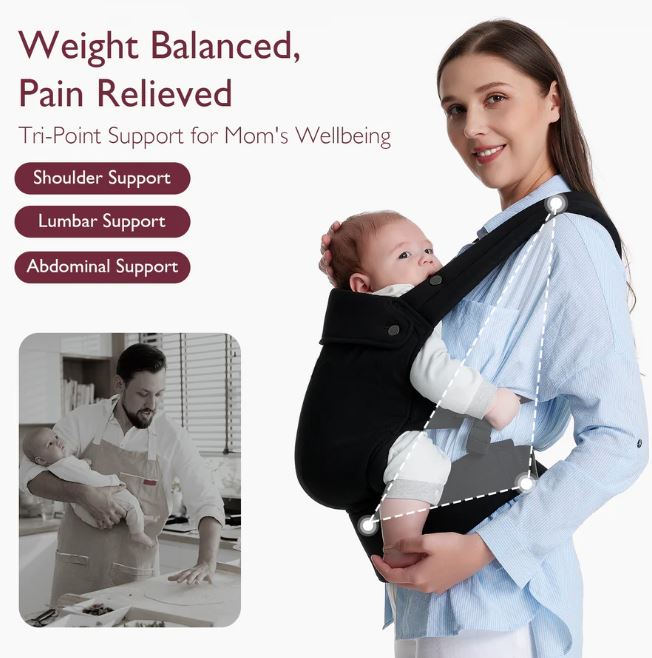
If comfort is at the top of your list when carrying your little one, the Momcozy Baby Carrier won’t let you down. Built with ergonomic EVA waist support, it minimizes strain on your back, allowing you to enjoy extended strolls and adventures without the worry of aches and pains.
Is Your Baby Ready for a New Carrier Position?
Your baby’s development will tell you when it’s time to try new carrying positions. Here’s what to look for:
Your Baby’s Head and Neck Are Getting Stronger
Look for steady head control – your baby should be able to hold their head up for several minutes without bobbing or dropping. When you hold them upright, their head should stay stable and they should be able to turn smoothly to look around. This usually happens around 4-5 months, but every baby is different.
Your Little One Can Sit Without Much Help
Before trying positions like hip carrying or back carrying, wait until your baby can sit without toppling over. They should be able to keep their back straight when seated and catch themselves if they start to lean. This typically develops around 6 months, when their core muscles are strong enough.
They’re Curious About the World Around Them
Notice how your baby responds to their environment. If they’re constantly trying to turn their head to see what’s happening, pushing back to look around, or getting fussy when they can’t see out, they might be ready for new positions that let them view their surroundings better.
Watch for Signs of Growing Strength
Your baby should be able to:
- Push up strongly during tummy time
- Hold their body fairly straight when held upright
- Move their arms and legs with purpose
- Show good muscle tone when you hold them
These milestones are more important than your baby’s age when deciding on carrier positions. Trust your instincts – if your baby seems uncomfortable in a new position, it’s perfectly fine to wait a bit longer before trying again.
4 Common Mistakes to Avoid When Using a Baby Carrier
Even experienced parents can slip up sometimes. Here are the key mistakes to avoid for safe and comfortable baby wearing:
Mistake #1: Positioning Your Baby Too Low or in Unsafe Positions
Never wear your baby too low – they should always be high enough for you to kiss their head easily. Make sure their chin isn’t tucked into their chest, which could make it hard for them to breathe. Your baby’s legs should make a natural “M” shape, with knees higher than their bottom. Watch that their back isn’t curved or slumped – it should be supported in a natural position.
Mistake #2: Using a Poorly Fitted or Incorrectly Adjusted Carrier
A carrier that’s too loose or too tight can make baby wearing uncomfortable and unsafe. Always tighten the straps so your baby feels secure but not squeezed. Don’t skip the waist strap – it’s crucial for supporting your back. When sharing the carrier between caregivers, take time to adjust it properly for each person’s body.
Mistake #3: Dressing Your Baby Incorrectly for Carrier Use
Remember that your body heat combines with the carrier material to keep your baby warm. Avoid overdressing them – they usually need one layer less than you think. In sunny weather, protect their exposed legs and feet. In cold weather, make sure their extras (like hats or blankets) don’t block their breathing space.
Mistake #4: Ignoring Weight Limits and Carrier Maintenance
Before using your carrier, check the weight limits and size guidelines to make sure it’s still right for your growing baby. Regularly inspect the carrier for any worn spots, loose stitching, or weak buckles. Taking a few minutes to check these safety points can prevent problems later. If anything looks worn or damaged, it’s time to repair or replace your carrier.
Each of these points focuses on what really matters – keeping your baby safe and comfortable while making baby wearing easier for you. When in doubt, remember the basics: keep your baby visible, supported, and close enough to kiss.
Choose the Right Time for Your Baby Carrier
If you’ve been wondering about when and how to use a baby carrier, here’s the good news – you can start from day one, as long as you keep a few simple safety rules in mind. For newborns, facing inward with good head support is key. As your baby grows stronger around 4-6 months, you can start exploring different positions like facing outward. Once they hit that 6-month mark and can sit well on their own, you’ll have even more options, from hip carries to back carries.
Every baby develops at their own pace, so follow your little one’s cues and enjoy those special close-up moments together. With the right carrier and proper safety checks, you can look forward to months of comfortable, happy baby wearing ahead.


