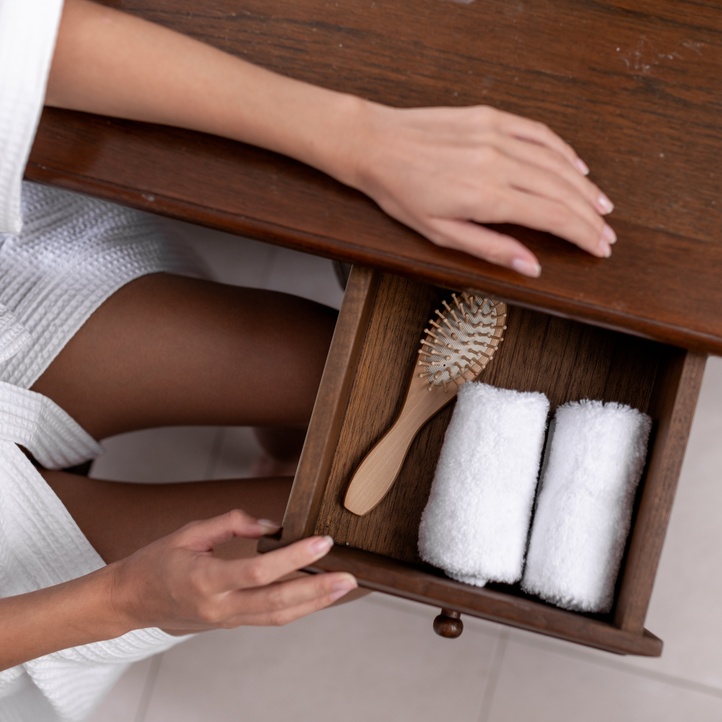
A hairbrush moves through your hair day after day, collecting loose strands and traces of the products you use to create your style. Even when the brush still looks relatively clean, hair and styling residue can collect around the bristles and base with regular use.
Building a few hairbrush habits that keep your routine hygienic can make tool maintenance feel like a normal part of caring for your hair. Regular attention keeps buildup manageable while making it easier to recognize when a favorite brush needs a deeper cleaning or replacement.
Start by Removing Hair From the Brush
Loose strands can quickly collect between bristles, especially if you have longer hair or notice more shedding during your usual brushing routine. Waiting until a thick layer develops makes the brush harder to clean because hair can wind tightly around the bristle bases and trap residue underneath.
Pull loose hair from your brush regularly before it becomes difficult to remove. Your fingers may work for a lightly covered brush, while a narrow comb or dedicated cleaning tool can reach strands wrapped around closely spaced bristles. Clearing the entire brush also gives you a better view of its condition and any areas that need additional cleaning.
Match Your Cleaning Method to the Brush
Once you remove trapped hair, check the brush’s material before reaching for water. A simple plastic brush and one with a wooden handle need different cleaning routines, and soaking every tool in the sink can damage materials that should stay relatively dry.
Washable plastic brushes can generally handle more direct cleaning, while wood or natural-bristle brushes may require gentler care. When you are unsure whether you can submerge a particular brush, check the manufacturer’s directions first. For brushes that tolerate washing, concentrate on clearing residue where the bristles meet the base, then allow the tool to dry completely before putting it away.
Give Styling Buildup Some Extra Attention
As you brush styled hair throughout the week, hairspray and dry shampoo can transfer from your strands onto the bristles and base. The residue may gradually become visible or leave the brush feeling coated, particularly if you rely on products to create volume or manage changing hair texture.
Because product use varies from one routine to another, let the condition of the brush guide when you clean it. A tool that looks dull or feels sticky may need attention sooner than one used mainly to detangle freshly washed hair. Regular cleaning keeps old styling residue from accumulating on a brush that goes back through your hair each morning.
Pay Attention to How You Use Each Brush
If you own more than one brush, assigning each one a clear purpose can make maintenance easier. A brush used on wet hair encounters different conditions from one reserved for blow-drying, and a finishing brush may pick up more styling product. Knowing how you use each tool gives you a better idea of what is collecting on it and when it deserves attention.
Because different brush designs collect hair and styling residue in different ways, you should tailor your cleaning methods to each tool’s construction. Closely spaced bristles may hold onto more loose strands, while cushioned bases can collect product buildup in areas that are harder to reach. Paying attention to these differences allows you to adjust your cleaning approach without treating every brush in your collection the same way.
Keep Personal Hair Tools Personal
Sharing a brush can feel harmless when someone needs to fix a hairstyle quickly, but keeping personal grooming tools separate makes everyday maintenance easier. Brushes and other hair accessories regularly touch the hair and scalp, so individual tools allow each person to monitor what needs cleaning.
If several family members use the same bathroom, give each person a designated brush and separate place to keep it. You might also keep a clean, inexpensive comb available for a guest who needs one. Doing so keeps your primary styling brush within your own routine without making occasional visitors search for a solution.
Know When Routine Cleaning Is Not Enough
Everyday brush maintenance addresses the residue that collects through normal styling, but certain situations call for additional precautions. When someone in the household has head lice, recently used brushes and hair accessories deserve particular attention because ordinary cleaning may not address the situation adequately.
Separating potentially affected tools from your usual styling supplies can make the cleaning process easier to manage. Following appropriate guidance for cleaning hairbrushes after lice exposure allows you to address that specific concern before returning the tools to your everyday routine.
Store Clean Brushes With Care
Cleaning a brush accomplishes less if you immediately return it to a container filled with loose hair or old styling residue. When you clean your brushes, wipe out the drawer or organizer where you keep them as well. Allow washed tools to dry before putting them away, so moisture does not remain trapped against other items.
Travel calls for a little extra thought because an uncovered brush tossed into a handbag or suitcase can collect lint from its surroundings. A washable pouch or brush cover keeps the bristles contained and makes the brush easier to pack. Once you return home, check the tool before putting it directly back with your everyday styling supplies.
Replace Brushes That Have Reached Their Limit
Cleaning can refresh a good brush, but it cannot repair one that has worn out. Bent bristles or damaged cushioning may change the way the tool moves through your hair, which matters even more if your strands have become finer or more prone to breakage. If a favorite brush begins snagging or feels noticeably different against your scalp, inspect the tool before assuming your technique needs to change.
When shopping for a replacement, consider how the brush feels on your hair along with how well it creates your preferred style. Bristle type and construction deserve attention, particularly when gentleness has become a greater priority in your routine. Choosing a brush that is easy to clean can make future maintenance simpler as well.
Make Brush Care Part of Your Hair Routine
Keeping your styling tools cleaner does not require an elaborate maintenance schedule. Removing loose strands before they become tangled around the bristles and paying attention to visible residue can tell you when a few minutes of cleaning are worthwhile. Taking care of storage prevents a freshly cleaned brush from immediately returning to a messy environment.
Once hairbrush habits that keep your routine hygienic become part of your regular hair care, cleaning no longer must wait until a brush looks neglected. Giving the tools you use every day consistent attention can keep them in better condition while making it easier to recognize when a favorite brush deserves deeper care or replacement.


